Do I Need a Backwater Valve?
Do I need a backwater valve? If sewage has ever come up your basement floor drain, or that drain sits low relative to the street sewer, probably yes: City Utilities itself advises one on the building sewer.
Answered by the Three Rivers Home Water desk · Last updated
In this answer
The short version
- Fort Wayne City Utilities' heavy-rain advice says to "install a back-flow prevention device on your building sewer," a device you control even when the public sewer is full.
- City Utilities' 2026 rules call for backflow prevention on new connections where the lowest drain isn't at least 1 foot above the rim of the first upstream manhole and the area is "susceptible to back-ups."
- FEMA's homeowner guidance (2024, revised 2025) describes three types: check valves, gate valves and dual backwater valves.
- A closed valve also blocks your own drains: FEMA says to stop using sinks, showers, toilets and the washer until it reopens.
- The valve sits on your own lateral, which the city's sewer rules leave entirely to the property owner to install and keep up.
Do you need a backwater valve?
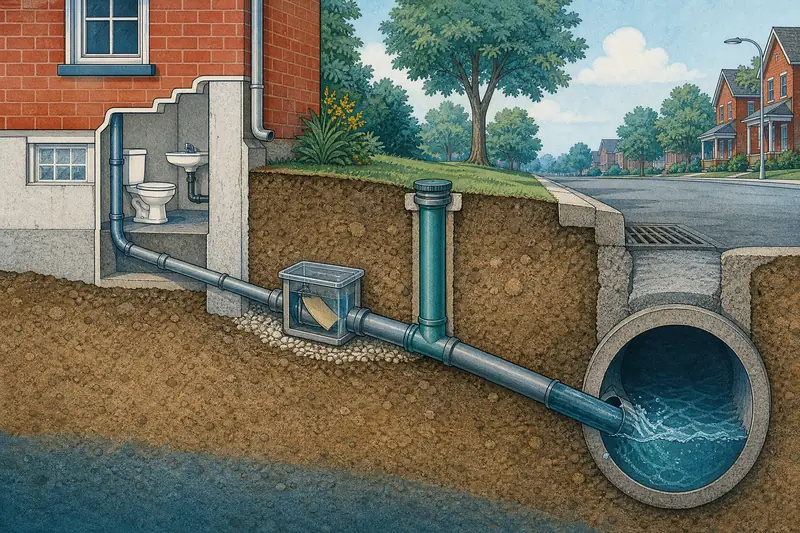
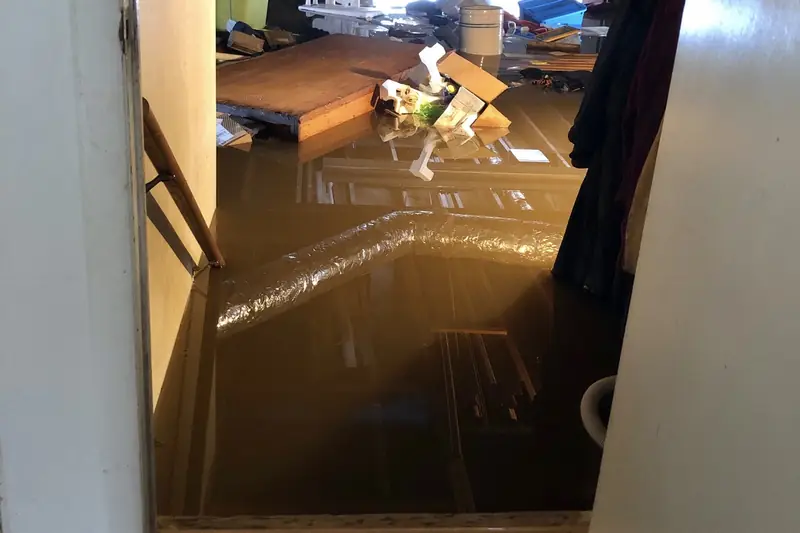
You need one if sewage could rise to your lowest drain before it drains away. The plain signs are a past backup through the floor drain, a finished or used basement with fixtures in it, and a house on an older combined sewer line.
City Utilities says so directly. Its Prepare for Heavy Precipitation page tells owners to "install a back-flow prevention device on your building sewer. This is a device you control, so even if the public sewer system is full, you can keep the sewage from coming into your home." The same page reminds owners that the building sewer between the house and the public line is their responsibility.
The utility's own engineering rule gives a way to think about elevation. The 2026 wastewater rules (section 3, PDF page 16) recommend a gravity connection only where the lowest floor with sanitary service is at least 1 foot above the top of the casting on the first manhole upstream. Where that can't be met "and in areas susceptible to back-ups, proper backflow prevention shall be designed." That rule governs new connections, but the logic applies to any house: if your floor drain is close to or below the level the street sewer reaches in a storm, sewage has a path in.
How does a backwater valve work?
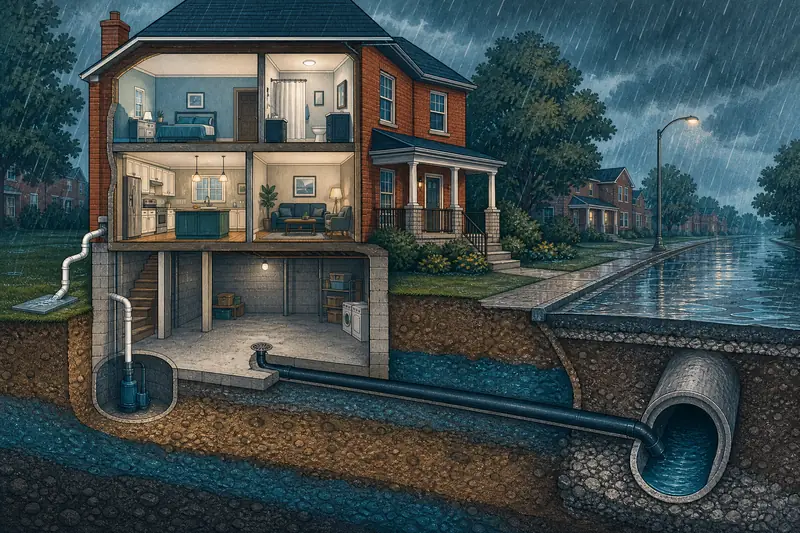
A backwater valve lets water leave the house and blocks it from coming back. FEMA's homeowner handbook on city flooding (PDF pages 37 to 40) describes them as devices that "allow wastewater and sewage to flow out of buildings but prevent flows from backing up into buildings" when public mains are at capacity, and calls one "a very effective way to prevent sewer backup."
Most are installed in the lateral outside the house, in a pit with an access cover. Some types fit in the basement floor near where the lateral leaves. Either way the valve sits on the line that every drain in the house feeds, so when it closes, it protects the whole basement.
That cuts both ways. When the valve is shut, nothing from inside can get out either. FEMA warns that during heavy storms you should avoid flushing toilets and using sinks, showers, the washer and the dishwasher, because the water "will have nowhere to go except back into your home." That is also why roof downspouts must not drain into the house sewer; the sump and downspout drainage rules explain the details.
What types of backwater valve are there?
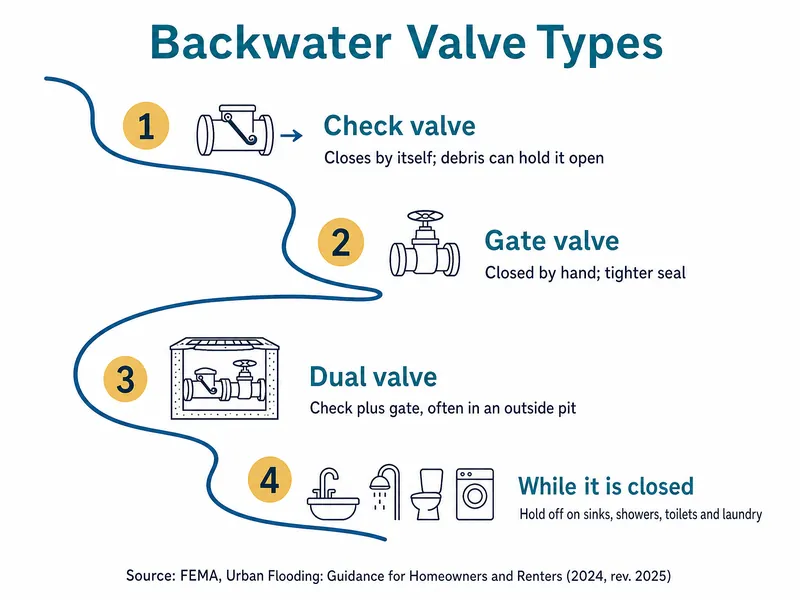
FEMA's guidance names three: check, gate and dual. They trade convenience against reliability.
| Type | How it closes | Strength | Weakness | Upkeep FEMA describes |
|---|---|---|---|---|
| Check valve | Automatically, by a flap | Protects you when you're asleep or away | "Can be stuck open by debris" | Inspect every few years; clean as needed |
| Gate valve | By hand | Better seal; unlikely to jam open | No protection unless you close it in time; costs more | Open and close it occasionally so it turns freely |
| Dual backwater valve | Flap closes on its own; gate closed by hand | "May be most effective in homes subject to repeated backflow flooding" | More parts to maintain | Both routines combined |
| Overhead sewer (alternative) | Basement drains pumped up to a high sewer line | Basement fixtures never sit below the lateral | Ejector pump needs power and service | Periodic inspection, pump maintenance |
FEMA suggests that if you'll be away for more than a day or two with a gate valve, you can close it before you go and consider shutting off the house water supply at the main shut-off as well.
Who installs a backwater valve in Fort Wayne?
A licensed plumbing contractor usually does, after deciding where the valve goes and which type suits your lateral. FEMA's guide says the plumber "will determine the best place to install a valve" and that the work calls for a plumbing permit. Here, ask the building department about permits before any digging begins.
You can confirm a contractor's Indiana plumbing license on the state's license lookup. Indiana's plumbing license law (IC 25-28.5-1-32) doesn't apply to an owner-occupant working on the plumbing of a home with 8 or fewer units, but a valve in a buried lateral is excavation and pipe-cutting work on a sewer line, and codes still apply. Opening or connecting to the public sewer itself needs a written permit from City Utilities Development Services under the 2026 rules.
This site found no Fort Wayne program that shares the cost of a backwater valve. The city's optional service-line protection plan covers repair of buried lines, not upgrades. More on that in the guide to who pays for sewer backups.
What does a backwater valve not do?
It doesn't stop groundwater, surface water or a failed sump pump. A backwater valve only guards the sewer line. Water seeping through walls or pouring down a stairwell needs grading, downspout and sump fixes instead; telling basement water sources apart shows which problem you have.
It also doesn't fix a blocked lateral. If tree roots or grease are clogging your own line, sewage from your house can back up even when the street sewer is flowing freely, as FEMA notes. A camera inspection and cleaning come first; a valve installed on a broken pipe won't seal.
And it won't work if it's stuck. A check valve held open by debris lets the backup straight through, which is why FEMA treats inspection as part of owning one.
Backwater valve facts
- 3valve types FEMA describes: check, gate, dualSource: FEMA flooding handbook, 2024
- 1 ftlowest drain above the upstream manhole rim before the city recommends a plain gravity connectionSource: City Utilities wastewater rules (2026)
- 15reports to IDEM in 2026's six-month window that dealt only with basement backupsSource: City Utilities status report #37
How do you maintain a backwater valve?
Inspect it on a schedule and after every major storm. FEMA's checklist asks whether the lateral has a check valve, gate valve, dual valve or overhead sewer, and says that if it does, "ensure that they are maintained annually." For check valves FEMA expects an inspection every few years at minimum; some valves need a plumber's check every couple of years.
A simple routine:
- Open the access cover and look at the flap or gate. It should move freely and seat fully.
- Clear debris such as paper, grease or roots from the valve body. Ask the installer how to flush it with water.
- Exercise a gate valve by closing and reopening it, so it turns when you need it.
- Check the cover and riser for damage and make sure the pit isn't buried or paved over.
- Write down the date and what you found.
Keep wipes, fats and oils out of the drains; FEMA lists them among the things that block laterals. For how the combined sewer behaves in storms, see the combined sewer overflow explainer.
How this answer was put together
Read in October 2026: sections 7 and 8 of FEMA's city flooding handbook for homeowners (November 2024, revised May 2025); City Utilities' heavy-rain advice page; the city's sewer rulebook in its October 2026 revision; the city's spring-summer 2026 status report to regulators; and Indiana Code 25-28.5-1-32. FEMA's guide was written for the Chicago area; only its general descriptions of valve types are used. Left out: installation prices and permit fees (not verified for Allen County), brand names, and any promise that a valve keeps a basement dry.
Follow-up questions
Is a backwater valve the same as a backflow preventer?
Not quite. A backwater valve sits on the sewer line and stops sewage coming back in. A backflow preventer on the water supply, like the device required on lawn sprinklers, protects drinking water. City Utilities' heavy-rain page uses "back-flow prevention device" for the sewer-side device.
Can I install a backwater valve inside the basement?
FEMA says some valve types can be installed in the basement floor near where the lateral leaves the house. Most are placed outside in a pit. The right spot depends on your pipe layout, so let the installer decide.
Does a backwater valve stop my toilet from flushing?
Only while it is closed. During a storm when the valve has shut, water you use has nowhere to go, so hold off on flushing and running water until the sewer level drops.
Will a backwater valve lower my insurance cost?
This site found no source tying backwater valves to premiums. Ask your insurer directly when you ask about a sewer or drain backup endorsement.
How do I know if my house already has a backwater valve?
Look for a round or square access cover in the basement floor near the main drain, or a capped riser in the yard along the sewer line. If you can't find one, a camera inspection of the lateral will show what is on it.
Do backwater valves need electricity?
Check, gate and dual valves don't. An overhead sewer system does, because an ejector pump lifts basement wastewater up to the high sewer line.
Next questions
Have another question? See every Fort Wayne home water answer.