What Is a Combined Sewer Overflow?
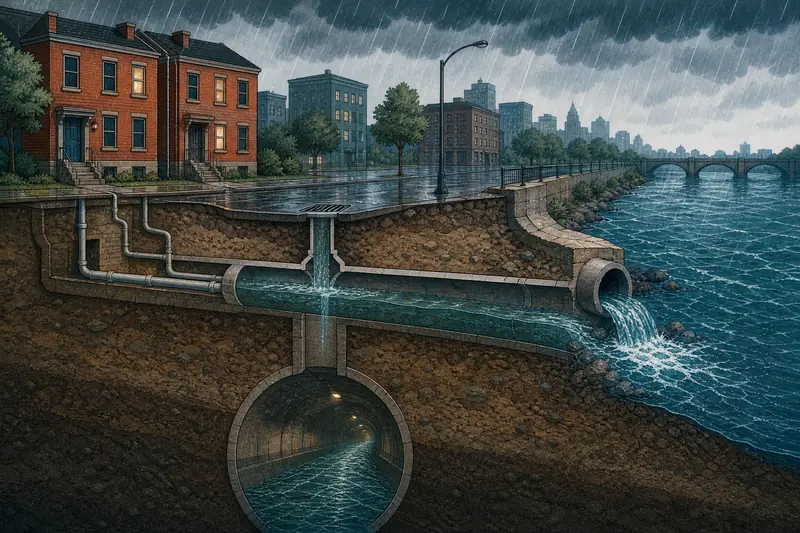
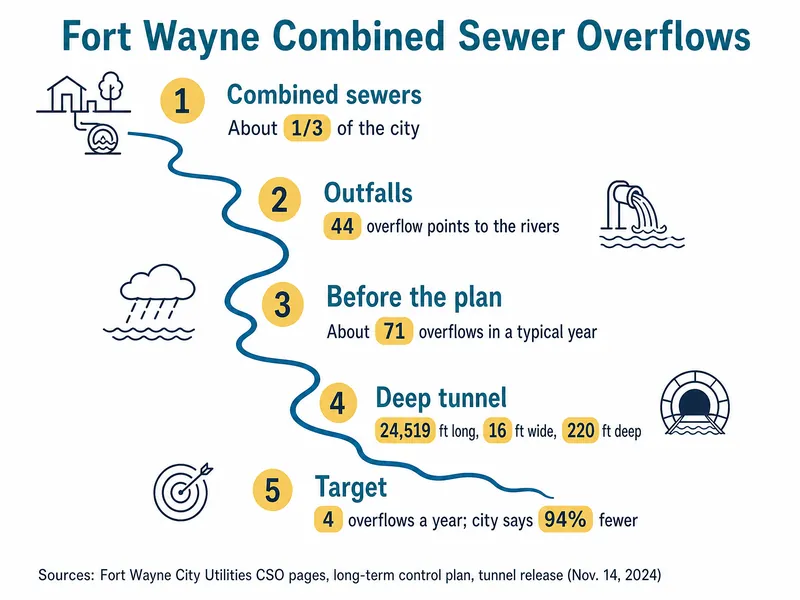
What is a combined sewer overflow? It's when a sewer carrying both rain and sewage fills in a storm and spills the mix into a river; Fort Wayne has 44 such outfalls on its three rivers and their tributaries.
Answered by the Three Rivers Home Water desk · Last updated
In this answer
The short version
- City Utilities says about one-third of Fort Wayne is served by combined sewers, mostly in the older part of the city, with 44 overflow outfalls.
- A 2008 consent decree between the city, U.S. EPA and IDEM set a long-term control plan to cut overflows on the St. Marys and Maumee from about 71 in a typical year to 4.
- The 3RPORT deep tunnel is 24,519 feet long (nearly 5 miles), 16 feet across and about 220 feet down; it became fully operational on November 14, 2024.
- City Utilities says the tunnel cuts overflows 94% and keeps almost 900 million gallons a year out of the rivers.
- The city posts a weekly spreadsheet of overflow events every Wednesday and offers email alerts; it tests river E. coli weekly from April 1 to October 31.
What is a combined sewer overflow?
A combined sewer overflow, or CSO, is a planned relief point where a combined sewer spills into a river when a storm sends more water down it than the pipes and treatment plant can take. A combined sewer carries household wastewater and street runoff in one pipe. In dry weather all of it reaches the treatment plant; in a heavy rain, the overflow keeps sewage from backing up into streets and basements by sending the excess to the river instead.
That trade-off is the whole problem. Every overflow puts diluted sewage in the water, and every overflow avoided needs somewhere else to hold the flood of rain until the plant can treat it. City Utilities' Tunnel Program FAQs say the sewer system includes 365 miles of combined sewer, alongside 1,014 miles of sanitary sewer and 610 miles of storm-only pipe.
Separate sanitary sewers can spill too, but those discharges are reported to the state as a different category in the city's consent decree status reports. On this page, CSO means the outfalls in the combined system.
Where are Fort Wayne's combined sewers?
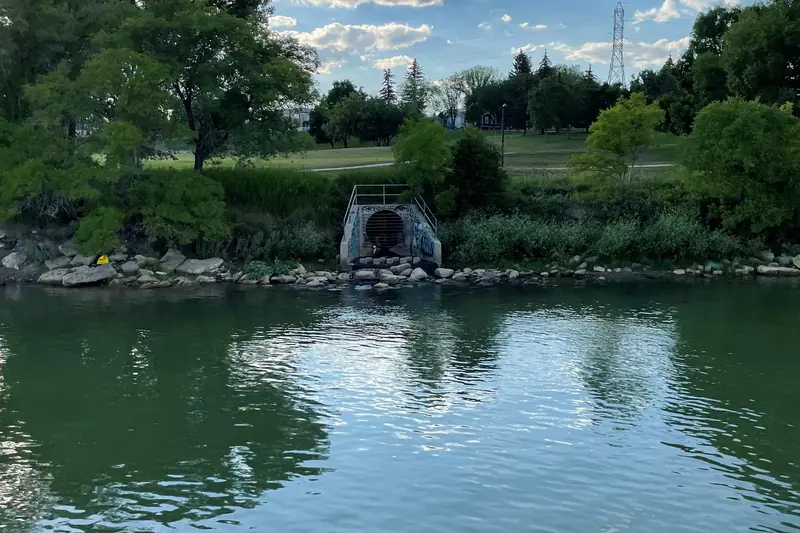
Mostly in the older core of the city. City Utilities' combined sewer page says combined sewers "are found most in the older part of the City" and that Fort Wayne has 44 combined sewer overflow outfalls "going to the three rivers and their tributaries." Its CSO notification page says about a third of the city is served by them.
The utility does not publish a street-by-street map in the pages this site read, and there is no acre or square-mile figure for the combined area. If you aren't sure which kind of sewer serves your house, ask City Utilities through 311.
What does the Fort Wayne sewer tunnel do?
It stores combined sewage during storms so it can be pumped to the treatment plant afterward instead of spilling into the rivers. City Utilities' November 14, 2024 release gives the as-built numbers: 24,519 feet of tunnel "stretching from Glasgow Avenue to Foster Park," 220 feet below the surface. The boring machine, named MamaJo, finished digging in June 2021, and the tunnel became "fully operational in year 17 of our 18-year Long-Term Control Plan."
| Item | Figure | Source |
|---|---|---|
| Tunnel length | 24,519 ft (nearly 5 miles) | City Utilities release, Nov. 14, 2024 |
| Diameter | 16 ft finished | City Utilities Tunnel Works page |
| Depth | About 220 ft, in bedrock | City Utilities release, 2024 |
| Drop shafts | Seven, 4 to 8 ft across | City Utilities Tunnel Works page |
| Cost of tunnel and drop shafts | About $188 million | City Utilities; EPA Clean Water SRF case study (2024) |
| Overflows, typical year | About 71 before; target of 4 | Consent decree long-term control plan |
| Properties protected from backups | 15,000 | City Utilities release, 2024 |
The city upsized the tunnel. An EPA Clean Water State Revolving Fund case study (August 2024) says a 12-foot tunnel would have met the requirement, and going to 16 feet added 18 million gallons of storage. EPA puts its useful life at 100 years. The city's release counts the whole investment, including neighborhood connections, at $400 million.
The plan behind it is legal, not optional. A consent decree issued by the U.S. Department of Justice in 2008 records the agreement among the city, EPA and the Indiana Department of Environmental Management, and the long-term control plan is part of it.
How often does Fort Wayne still have overflows?
The goal is about 4 overflow events in a typical year on the St. Marys and Maumee, down from about 71. City Utilities' Tunnel Works page and FAQs give those two figures, and its 2024 release says the tunnel cuts overflows 94% and keeps "almost 900 million gallons of combined sewage" a year out of the rivers. The release itself mentions a historic average of 72; this site uses the plan's 71.
"Typical year" is a planning term. A year with more big storms than average will produce more overflows, and the target applies to the St. Marys and Maumee, not every outfall on every tributary.
This site found no published annual count of overflows since the tunnel opened. The city's six-month consent decree status reports are the formal record: report #37, covering March 30 to August 31, 2026, says the city met all consent decree deadlines in that period.
CSO numbers for Fort Wayne
- 44combined sewer overflow outfallsSource: City Utilities
- 71 → 4overflows in a typical year, before and after the planSource: City Utilities Tunnel Works program
- 94%fewer overflows, by the city's estimateSource: City Utilities release (Nov. 2024)
- 900 milliongallons a year kept out of the rivers (city: "almost")Source: City Utilities release (Nov. 2024)
- 235E. coli per 100 mL, the IDEM standard the city tests againstSource: City Utilities CSO notification page
How do you get combined sewer overflow alerts?
Sign up on City Utilities' CSO pages. The CSO notification page offers email notice of overflow events, and it posts a spreadsheet of events from the past 7 days, with locations, start and end times and estimated volume, updated each Wednesday.
The same page reports river water quality. City Utilities tests for E. coli weekly from April 1 to October 31 at bridges on the rivers, against IDEM's standard of 235 organisms per 100 mL. If you kayak, fish or let a dog swim downstream of the older neighborhoods, check the latest results and stay out of the water for a while after heavy rain.
Alerts are about the rivers, not your basement. For that, the warning sign is water at the floor drain; see who fixes a sewer backup in Fort Wayne.
Do combined sewers flood basements?
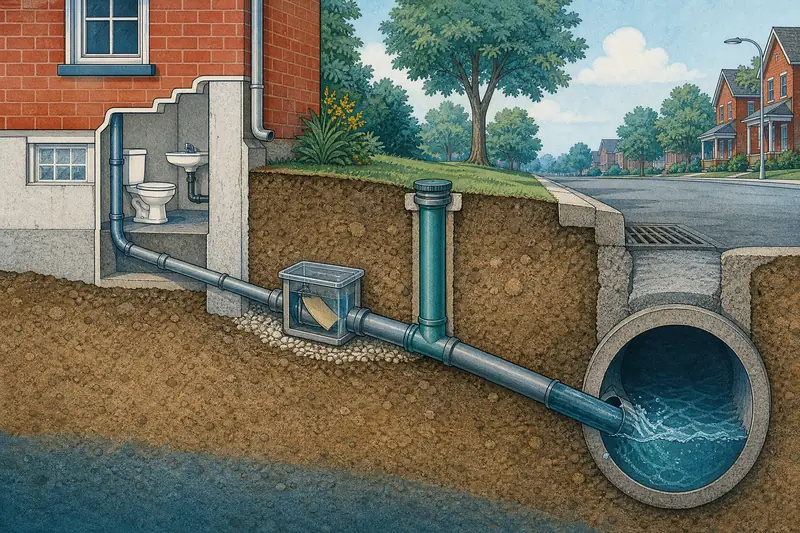
They can, when they fill faster than they drain. FEMA's Urban Flooding guidance explains that backups happen "when the system cannot drain as quickly as it is being filled," and sewage then comes up through floor drains, toilets and sinks. City Utilities' 2024 release says the tunnel protects 15,000 properties by reducing basement backups and street flooding.
Reducing isn't eliminating, and two things are still on the owner. First, the 2026 wastewater rules let the utility order sump pumps and downspouts off a combined sewer, because roof and groundwater add to the flood in the pipe; see can my sump pump drain into the sewer. Second, City Utilities' heavy-rain advice is to put a backflow prevention device on your building sewer: do I need a backwater valve covers the options. All the related questions are on the basements and sewers page.
How this answer was put together
Built from Fort Wayne City Utilities' combined sewer, CSO notification, consent decree, Tunnel Works program and Tunnel Program FAQ pages, its November 14, 2024 tunnel release and its Consent Decree Six-Month Status Report #37 (2026); the U.S. EPA Clean Water SRF case study on the tunnel (August 2024); and FEMA's Urban Flooding guidance (November 2024, revised May 2025), all read in October 2026. Where city pages disagree (71 or 72 overflows, 90% or 94%, 150 to 250 feet deep), this page uses the long-term control plan's 71, the as-built 220 feet and the 2024 release's 94%, and names the source. Left out: a map of combined areas and post-tunnel overflow counts, neither of which was published on the pages read.
Follow-up questions
Is it safe to swim in Fort Wayne's rivers after rain?
City Utilities tests river E. coli weekly from April to October against IDEM's 235 per 100 mL standard and posts recent overflow events weekly. After heavy rain in the combined-sewer area, the safest choice is to wait and check the latest results first.
Why didn't Fort Wayne just separate all its sewers?
The city's long-term control plan chose a mix of storage, relief sewers and the deep tunnel, approved under the 2008 consent decree. Separating every combined pipe would mean digging up the older streets and every house connection; this site found no city cost estimate for full separation.
Does the sewer tunnel affect my sewer bill?
The tunnel and drop shafts cost about $188 million, financed through EPA's Clean Water State Revolving Fund, and the city counts $400 million including connections. This site did not find a city document tying a specific rate change to the tunnel.
What is a "typical year" in the overflow target?
It's a planning baseline of average rainfall used in the long-term control plan. Wetter-than-typical years can produce more than 4 overflows without breaking the plan.
Do combined sewer overflows affect Fort Wayne's drinking water?
City Utilities' 2026 water quality report names the St. Joseph River as the city's drinking water source, treated at the Three Rivers Filtration Plant. The overflow plan's target is set for the St. Marys and Maumee. For the treatment steps, see the tap water questions on this site.
Where does the tunnel's water go after a storm?
It is held until the sewer system has room and then sent on for treatment. The city's tunnel FAQ lists a pumping station among the project's parts and says the treatment plant can handle up to 85 million gallons a day in wet weather.
Next questions


Have another question? See Fort Wayne home water questions, answered.