Why Does My Tap Water Taste Earthy?
Why does my tap water taste earthy? Usually because algae, bacteria and tiny fungi in sunlit river water release harmless smelly compounds; Fort Wayne City Utilities says earthy or musty water is typically safe to drink.
Answered by the Three Rivers Home Water desk · Last updated
In this answer
The short version
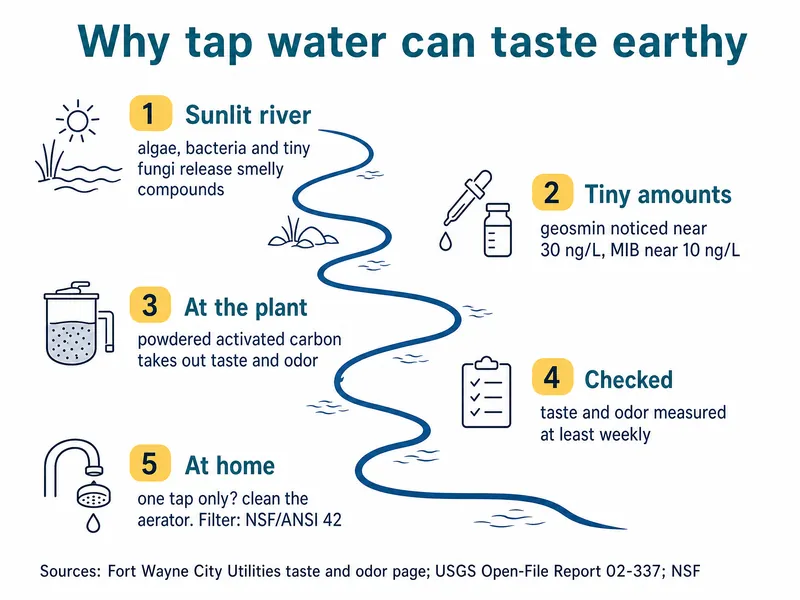
- City Utilities' taste and odor page says some algae, bacteria and tiny fungi on sunlit source water release "harmless but smelly chemicals" that cause earthy or musty tastes.
- The two usual culprits are geosmin and 2-methylisoborneol (MIB); a USGS method report says the general public can typically detect about 30 and 10 nanograms per liter of them.
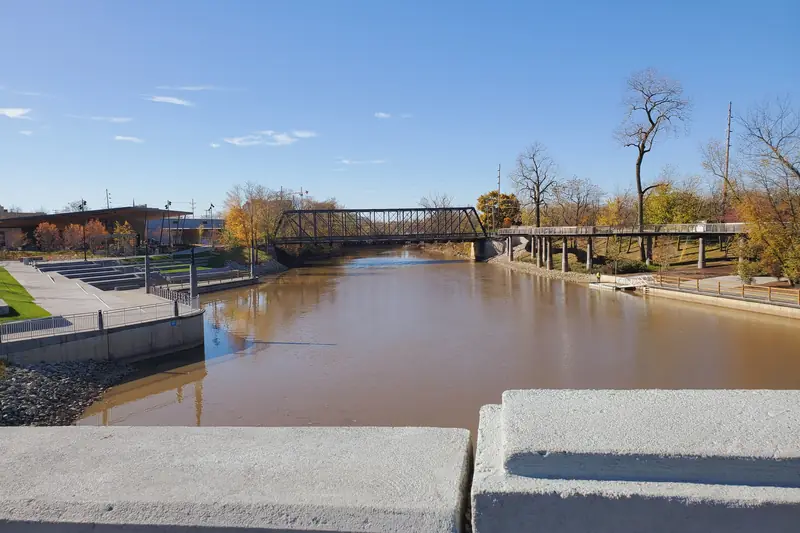
- Fort Wayne's water comes from the St. Joseph River, and the plant adds powdered activated carbon to take out taste and odor.
- The city measures taste and odor at least weekly and posts a daily taste indicator based on the last 48 hours of testing.
- If only one faucet tastes earthy, the city suggests cleaning the aerator at the end of that faucet.
- A filter certified to NSF/ANSI 42 is the standard for taste and odor reduction.
Why does tap water taste earthy in summer?
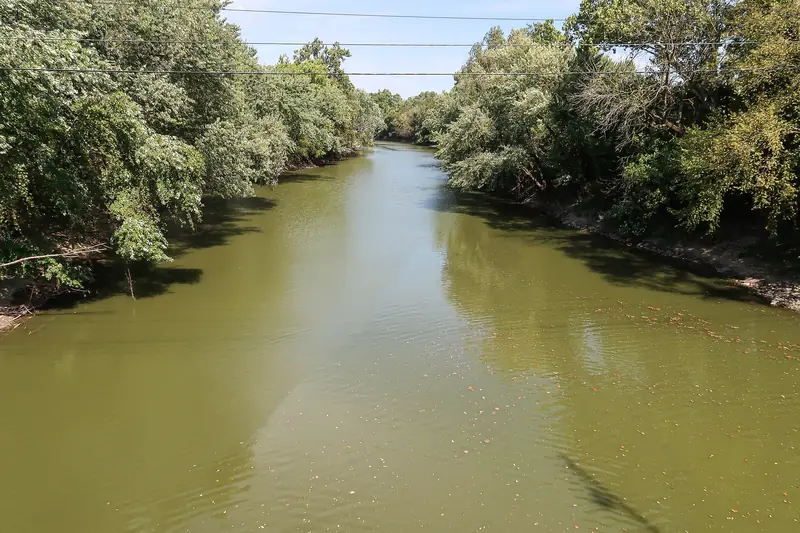
Tap water tastes earthy in warm, bright weather because that is when algae, bacteria and fungi grow fastest in river water exposed to sunlight. City Utilities explains that these organisms "can release harmless but smelly chemicals", and that "the little fungi can cause an earthy-musty taste" while different algae can give grassy or swampy notes.
Fort Wayne draws all its tap water from the St. Joseph River (see the city's river source), so the river's conditions reach the plant directly. Its 2026 report adds that "changing weather conditions and fluctuations in river water quality can cause changes in taste and odor". USGS researchers who study taste-and-odor episodes use light and water temperature among the readings that predict geosmin, according to a USGS laboratory page.
The compounds matter in tiny amounts. The USGS method report puts the level most people notice at about 30 nanograms per liter for geosmin and 10 for MIB, which is parts per trillion. A plant can remove most of a compound and still leave enough for some people to taste.
Taste and odor, by the numbers
- 30 ng/LGeosmin level the general public can typically detectSource: USGS Open-File Report 02-337
- 10 ng/LMIB level the general public can typically detectSource: USGS Open-File Report 02-337
- WeeklyMinimum frequency City Utilities measures taste and odorSource: City Utilities taste and odor page
- 48 hoursTesting window behind the city's daily taste indicatorSource: City Utilities taste and odor page
Is earthy-tasting tap water safe?
Yes, in the city's words, water with an earthy or musty smell "is typically safe to drink". City Utilities calls the compounds behind it "harmless but smelly", and its taste-and-odor page says changes in taste and odor "typically do not indicate that the water is unsafe".
Safety is set by the rules in the yearly report, not by taste. For 2025, the 2026 water quality report lists every regulated row as "Compliance Achieved: Yes", with E. coli at 0 and turbidity meeting the standard in 100% of samples. How to read the yearly report explains those rows.
One caution: "earthy" is a city-water answer. If you are on a private well and the water suddenly tastes or smells different, EPA advises testing right away, and how often to test your well covers what to test for.
How does Fort Wayne treat taste and odor?
Fort Wayne treats taste and odor mainly with powdered activated carbon, which the city says is "similar to charcoal" and is added to the water "then removed, taking taste and odor with it". It sits alongside the other steps at the Three Rivers Filtration Plant: coagulation and settling, lime softening, chlorine and chlorine dioxide, and UV light.
The plant watches the river constantly and adjusts. The city's water quality page says continuous monitoring of St. Joseph River water "helps operators at the plant adjust the treatment process". Taste and odor are measured at least weekly, and more often when river conditions could cause an unpleasant flavor.
There is a lag. After the plant changes treatment, the city says, "it may take a few days for the newly treated water to reach your tap", so a taste can linger at the far end of the system after the plant has caught it. The city also posts a daily taste indicator on its taste-and-odor page; "Clear" means the water "has no noticeable taste to most people".
Why does tap water smell like chlorine?
A swimming-pool smell comes from the disinfectant, which City Utilities must keep in the water all the way to your tap. The city says a small amount of chlorine "is required in the water that reaches your tap to prevent the regrowth of bacteria", and water leaving the plant must carry at least 0.5 ppm.
Fort Wayne uses free chlorine plus chlorine dioxide. The 2026 report lists chlorine's highest level in 2025 at 2.10 ppm (range 1.54–2.10) against an EPA maximum of 4 ppm. Reports print ppm (parts per million, equal to mg/L) and ppb (parts per billion, equal to µg/L).
Chlorine and earthy tastes are different problems with similar fixes, because activated carbon reduces both. Whether a whole-house unit is worth it has its own page: is a chlorine filter worth it on city water.
| Taste or smell | Likely cause the city gives | What the city suggests |
|---|---|---|
| Earthy or musty | Algae, bacteria and fungi in sunlit source water | Typically safe; clean the aerator if only one tap |
| Like a swimming pool | Chlorine disinfectant | Safe at the levels used |
| Chemicals or plastic | New pipe linings or new plastic piping | Usually clears in a few weeks; flushing helps |
| Bitter or medicinal | Copper from corroding copper plumbing, or zinc or dissolved solids | Look for blue-green stains |
| Metallic | Zinc from galvanized pipe, or iron and manganese | Not a health problem at taste levels |
| Salty | Chloride or sulfate, often road salt in winter | Get the water tested |
| Like a wet dog | Treatment chemicals, bacteria, metal plumbing or organic matter | Likely safe; test for bacteria |
What if only one tap tastes earthy?
If only one faucet tastes earthy, the cause is probably at that faucet, not the plant. City Utilities says that in that case "you may be able to remove and clean the cylinder at the end of the faucet", meaning the aerator, where sediment and biofilm collect.
Unscrew the aerator, rinse the screen and soak it in vinegar if it has scale (city water carried 130 mg/L of hardness on average in 2025, enough to leave scale; see is Fort Wayne water hard). Run cold water for a minute before you taste again. If the earthy taste shows up only in hot water, look at the water heater rather than the plant.
Which filters remove earthy taste?
Activated carbon filters are the type that reduce earthy and musty tastes, and the certification to look for is NSF/ANSI 42. NSF says filters certified to that standard "reduce aesthetic impurities such as chlorine and taste/odor", in both point-of-use (pitcher, faucet, under-sink) and whole-house versions.
Check the certification listing for the exact model and the exact claim, because NSF also warns that certification "does not mean that a filter... will reduce all possible contaminants". A pitcher or faucet filter is the low-cost test: if it fixes the taste you mind, you may not need anything bigger. Change cartridges on schedule, since a spent carbon filter stops helping.
Reverse osmosis units also include carbon stages, and they reduce other things too; is reverse osmosis worth it weighs that choice. A water softener does not change earthy taste.
How this answer was put together
This answer is based on Fort Wayne City Utilities' taste and odor page and water quality page, its 2026 Annual Drinking Water Quality Report (2025 data), USGS Open-File Report 02-337 (2002) on geosmin and MIB, a USGS Organic Geochemistry Research Laboratory page on taste-and-odor episodes and NSF's page on water treatment standards, all read in October 2026. Home remedies without a published source (such as chilling or aerating water to hide taste) were left out, and so were filter brand recommendations.
Follow-up questions
Does Fort Wayne post when the water might taste earthy?
Yes. City Utilities' taste and odor page shows a current condition based on testing in the last 48 hours. "Clear" means no noticeable taste to most people; the city says that as the scale moves toward green, odors may start to be noticed.
Is geosmin the same thing that makes soil smell after rain?
Geosmin is the compound most associated with earthy smells, and USGS names it with MIB as the cyanobacterial compounds most often linked to taste-and-odor episodes. Its name literally means "earth smell", which is why the descriptions match.
Will boiling water get rid of an earthy taste?
No published city or federal source reviewed for this page says boiling removes it, so do not count on it. A carbon filter certified to NSF/ANSI 42 for taste and odor is the documented route.
Does earthy taste mean there is a toxic algae bloom?
Not by itself. City Utilities calls the compounds behind earthy taste harmless, and its report lists every regulated contaminant row as compliant for 2025. Taste and safety are tracked separately.
Why can a neighbor taste it when nobody in my house can?
People differ in how sensitive they are to these compounds, and the USGS figures are typical detection levels, not a fixed line. Water age matters too: homes farther from the plant may get treated water a few days later.
Can a refrigerator filter fix earthy-tasting water?
It can if the filter is certified for taste and odor under NSF/ANSI 42 and the cartridge is not past its rated life. Look up the cartridge model in the certifier's listing rather than relying on the box.
Who do I contact about a bad taste in Fort Wayne?
City Utilities takes calls through 311. This site is not part of the utility and has no way to check your water.
More tap water questions


Have another question? See Fort Wayne home water questions, answered.