Why Does My Basement Flood When It Rains?
Why does my basement flood when it rains? Usually for one of four reasons: groundwater seeping through cracks, surface water pouring in, a sump pump that stops, or sewage backing up through a floor drain.
Answered by the Three Rivers Home Water desk · Last updated

In this answer
The short version
- FEMA's urban flooding guidance names the usual paths: cracks and wall-floor joints, low doors and window wells, a failed sump pump, and sewage pushed back up through floor drains.
- Surface water through a low opening can fill a basement in minutes; a sewer backup rises more slowly because house drain pipes are narrow (FEMA, 2024, revised 2025).
- City Utilities puts roughly a third of the city on combined sewers, where storm runoff and household wastewater travel in one pipe.
- Fort Wayne's 2026 wastewater rules bar downspouts, sump pumps, yard drains and subsoil drains from the sanitary sewer, "directly or indirectly".
- The pipe from your house to the public sewer is yours to maintain under the city's 2026 sewer rules.
- City Utilities says the deep tunnel that opened November 14, 2024 protects 15,000 properties by reducing basement backups and street flooding.
Why does a basement flood when it rains?
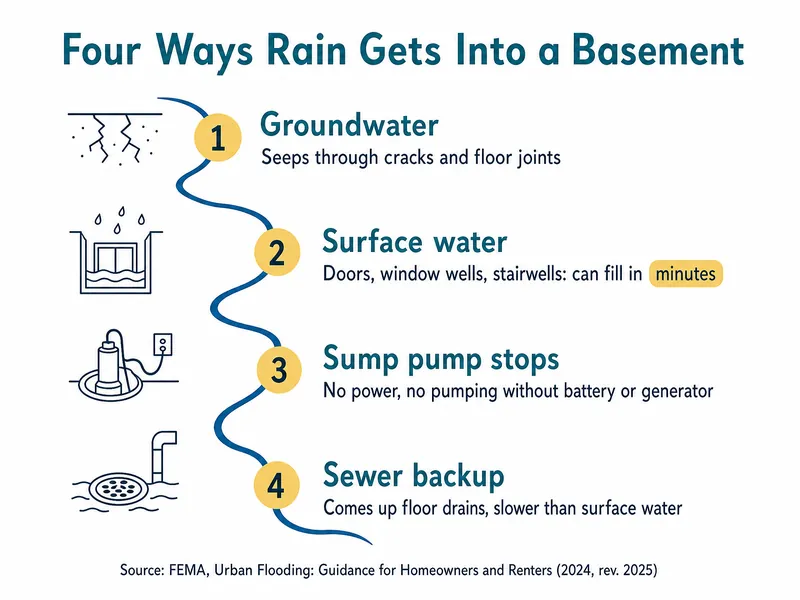
A basement floods in rain when water outside has an easier path in than away. FEMA's 2024 urban flooding handbook for households sorts it into two families: water that comes from outside (groundwater and surface runoff) and water that comes up through the plumbing (sewer backup).
The four common culprits, roughly from slowest to fastest:
- Groundwater that rises around the foundation and seeps through cracks in the walls, the floor or the joint where they meet.
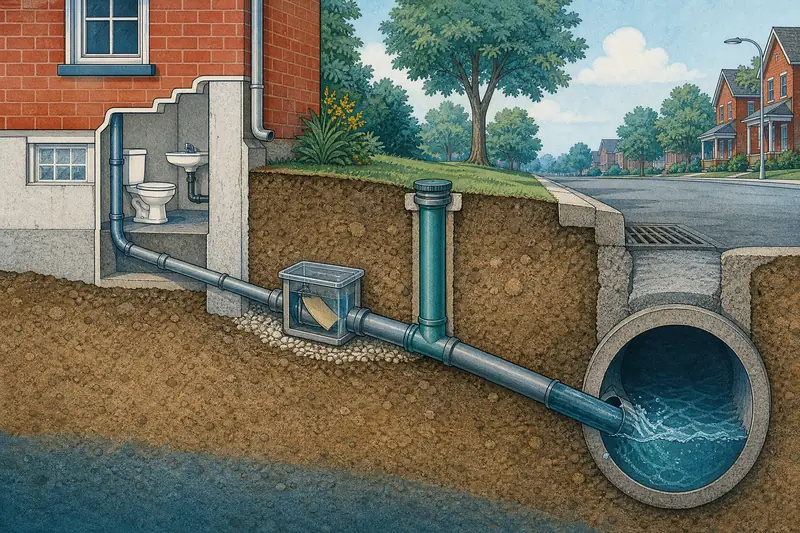
- Sewer backup through a floor drain, laundry tub or low toilet when the pipe downstream can't keep up.
- A sump pump that stops, because the power is out, the float sticks or the inflow is more than it can move.
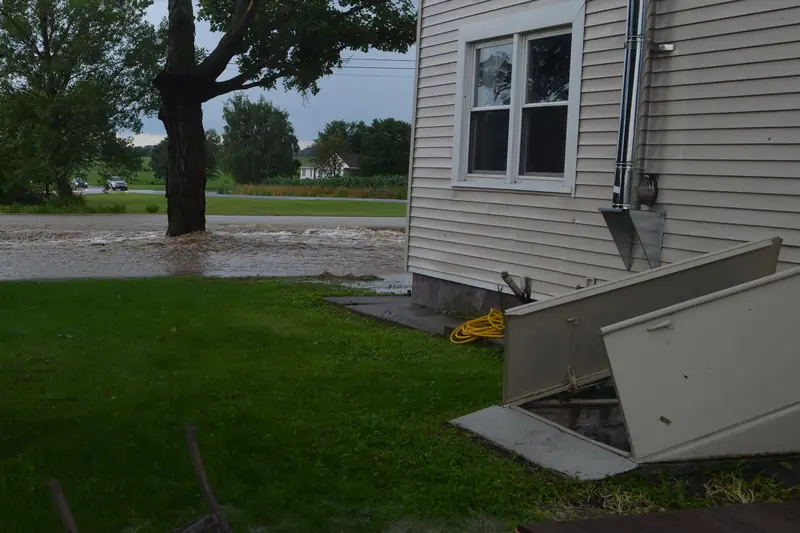
- Surface water running in through a low window well, a basement stairwell door or a vent at ground level.
FEMA warns that surface flooding through openings can take "just a matter of minutes" to match the water level outside. A sewer backup is slower because of the limited size of drainpipes. That difference is one of the best clues you have.
How do you tell groundwater from sewer backup?
Look at where the water first appeared and what it looks like. Groundwater shows up along cracks, at the wall-floor joint or around pipe openings, and it is usually clear. A sewer backup comes up out of a fixture: FEMA lists "floor drains, toilets, sinks, or any other plumbing fixtures that connect to the sewer line." It is grey or brown, it smells, and it may leave paper or debris behind.
Timing helps too. Water that appears hours into a long, soaking rain and keeps creeping in after the rain stops points to groundwater. Water that rises out of the floor drain during the heaviest part of a storm points to an overloaded sewer, or to a partly blocked lateral that can't pass the flow.
| Source | Where it appears | What it looks like | First thing to check |
|---|---|---|---|
| Groundwater | Cracks, wall-floor joint, pipe openings | Clear, slow seep | Downspouts, grading, sump pump |
| Surface water | Stairwell door, window wells, vents | Muddy, fast | Low openings, yard slope |
| Sump failure | Rises out of the sump pit | Clear to cloudy | Power, float, discharge line |
| Sewer backup | Floor drain, low toilet or tub | Grey or brown, sewage odor | Your lateral, then call 311 if the street sewer is involved |
If you can't tell, treat the water as sewage until you know otherwise. That changes how you clean up (see the last section).
Do downspouts flood basements?
Yes, downspouts that dump next to the foundation are one of the most common reasons groundwater reaches basement walls. FEMA's walk-around checklist tells homeowners to point downspouts away from the walls so roof water can't pile up against the foundation.
In Fort Wayne a downspout tied into the house sewer is also against the rules. Section 14 of the city's sewer rulebook, revised in October 2026, keeps roof downspouts, sump pumps and yard drains off the sanitary system entirely. Inspectors can order a connection removed, and the owner then has a month (30 days) to re-route it. Roof water in the sanitary line adds load to the same pipe your basement drain relies on in a storm.
The rules on where sump and roof water may go have their own page.
Why did my basement flood when the sump pump ran?
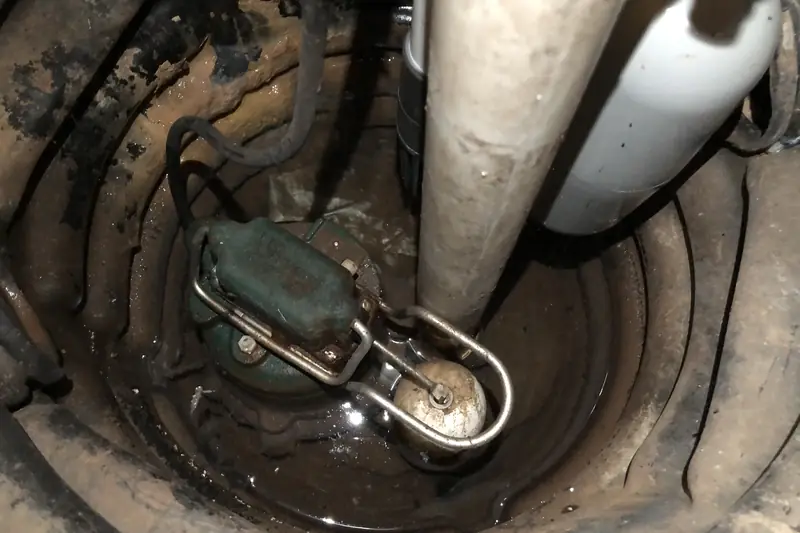
A running pump can still lose the race. FEMA points out that an ordinary sump pump is built for modest inflow and quits in a blackout. If the pump was running and the water still rose, the likely reasons are:
- Inflow beat the pump: more water reached the pit than the pump could move.
- The discharge was recycling: a short outlet dumped water beside the house, and it soaked back down to the drain tile.
- The check valve or discharge line failed, so pumped water ran back into the pit.
- The water wasn't groundwater: if it came up through the floor drain, the sump pump never had a chance to help.
City Utilities' heavy-precipitation advice says to make sure the sump pump works and, if it "runs frequently even when it's not raining," to consider an alternate power source. More on that at do I need a sump pump backup.
Does the combined sewer flood basements?
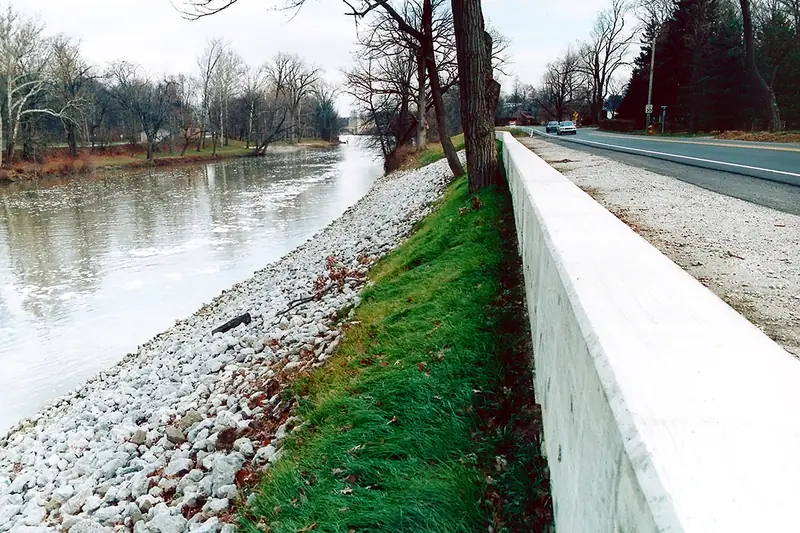
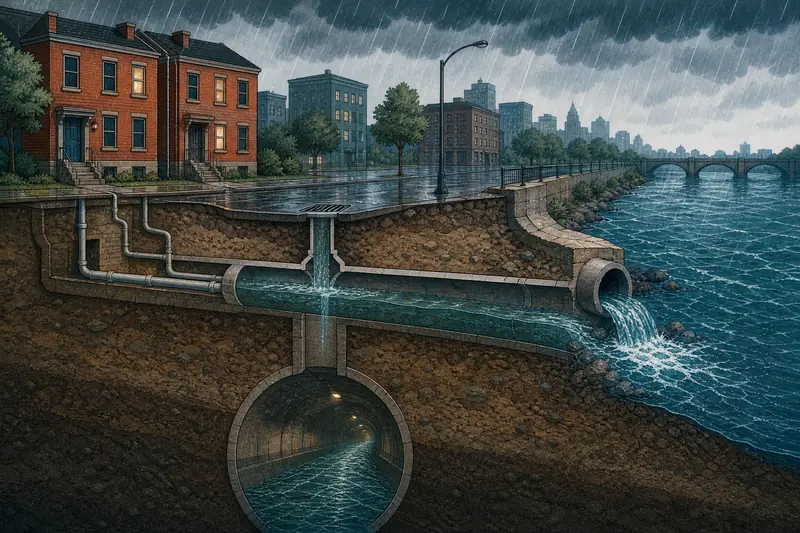
It can, in the older neighborhoods. Fort Wayne's combined pipes, which the utility says cover around one-third of the city and sit mainly in its oldest sections, carry rainwater and sewage together. In a heavy storm those pipes fill, and water looks for the lowest outlet, which can be your floor drain.
The city's deep sewer tunnel was built to relieve this. In its November 14, 2024 release City Utilities said the tunnel would "protect 15,000 properties by reducing basement backups and neighborhood street flooding." Reducing is not ending: the utility's own rules still require property owners to protect low drains (below), and the city's most recent six-month report to federal and state regulators (covering March to August 2026) lists 15 basement backup reports.
For new hookups, the city's engineering rule wants the lowest drained floor a foot or more higher than the nearest upstream manhole; below that, it expects backflow protection in backup-prone areas. If your floor drain is low and you're on an older combined line, read about backwater valves for low basement drains and how Fort Wayne's combined sewers overflow.
What should you do after a basement floods?
Stay safe first, then document, then clean. FEMA's guidance says to keep power off at the main breaker until an electrician has checked the system if water reached outlets or equipment, to photograph the damage and the water line before you move anything, and to call your insurer early.
If the water came from the sewer, follow City Utilities' cleanup advice: stay out of contact with it, gear up in gloves and boots, and use its bleach-and-water disinfecting mix on hard surfaces. FEMA adds that mold can form within 48 hours, so dry the space with fans and dehumidifiers and throw out porous items that can't be fully cleaned. Never mix bleach with ammonia.
Then work out whose problem the cause is. Under the city's rules, the private line from your foundation out to the street is the owner's, not the utility's. If neighbors on the street are backing up too, or you see a sinkhole, report it through 311. Who repairs what after a backup walks through that split, and the basements and sewers page lists every related question.
Basement flooding by the numbers
- 1/3share of the city with combined sewer pipesSource: Fort Wayne City Utilities
- 30 daysto re-route a banned downspout or sump line after an orderSource: City Utilities sewer rules (2026)
- 15,000homes and buildings the tunnel is meant to shieldSource: City Utilities release (Nov. 2024)
- 48 hoursbefore mold can begin to growSource: FEMA flooding handbook (2024)
How this answer was put together
Sources, each opened in October 2026: FEMA's urban flooding handbook for households (November 2024, revised May 2025); City Utilities' sewer rulebook in its October 2026 revision; the utility's pages on heavy rain and on cleanup; its tunnel announcement from November 2024; and its spring-summer 2026 report to regulators. FEMA's document was written for Cook County, Illinois; we use only its general explanations, not its local programs. Left out: waterproofing products and costs, since no primary source gives Fort Wayne figures, and any estimate of how many local homes flood.
Follow-up questions
Can a basement flood if the house is not in a floodplain?
Yes. FEMA's guidance points out that areas outside the mapped floodplain can still flood from heavy rain, sewer backups, clogged street inlets and runoff. Most basement water in a city storm has nothing to do with a river leaving its banks.
Can a clogged floor drain cause basement flooding?
Yes. The Insurance Institute for Business and Home Safety's 2024 interior water report says clogged plumbing drains were the most commonly cited maintenance-related cause of interior water losses. FEMA's guidance suggests keeping basement floor drains clear and having the lateral inspected and cleaned of roots.
Is water coming through the basement wall a sewer problem?
Usually not. Water that seeps through a wall crack or the wall-floor joint is almost always groundwater or surface water, not sewage. Sewer water arrives through a drain or fixture.
Does City Utilities pay for basement flood damage?
Generally no: the city's rules leave the private sewer line and backup damage with the owner. Three Rivers Home Water found no local program that splits the cost of flood-proofing work. Ask your insurer about what your own policy covers.
Is a wet basement after rain covered by homeowners insurance?
Often not. FEMA warns that a standard homeowners policy leaves out flood and can leave out sewer backup as well. Before the next storm, read the exclusions and ask your insurer about a sewer or drain backup endorsement.
Should I unplug things when the basement starts flooding?
Only if you can do it without standing in water. FEMA says to keep power off at the main breaker until an electrician has inspected the system after a flood. If water is near outlets or equipment, stay out and shut off power from a dry place.
Does the new sewer tunnel mean my basement won't flood?
No. City Utilities describes the tunnel as reducing basement backups, not ending them, and it only serves the combined-sewer area. Groundwater, surface water and a failed sump pump are all separate from the public sewer.
Next questions
Have another question? See the full list of Fort Wayne home water questions.