Do I Need a Water Softener in Fort Wayne?
Do I need a water softener in Fort Wayne? Not on city water, which averaged 130 mg/L (about 7.6 gpg) in 2025 after lime softening; on a private well, usually yes, once a lab test confirms the hardness.
Answered by the Three Rivers Home Water desk · Last updated
About the store links on this page: SoftPro Water Systems and Quality Water Treatment, the two stores linked on this page, have the same owners as Three Rivers Home Water. Answers here lean on Fort Wayne City Utilities' published reports and rules, Indiana and federal agency guidance and makers' certification listings, read in October 2026. What a store says about its own products is quoted as the store's claim. How store links work
In this answer
The short version
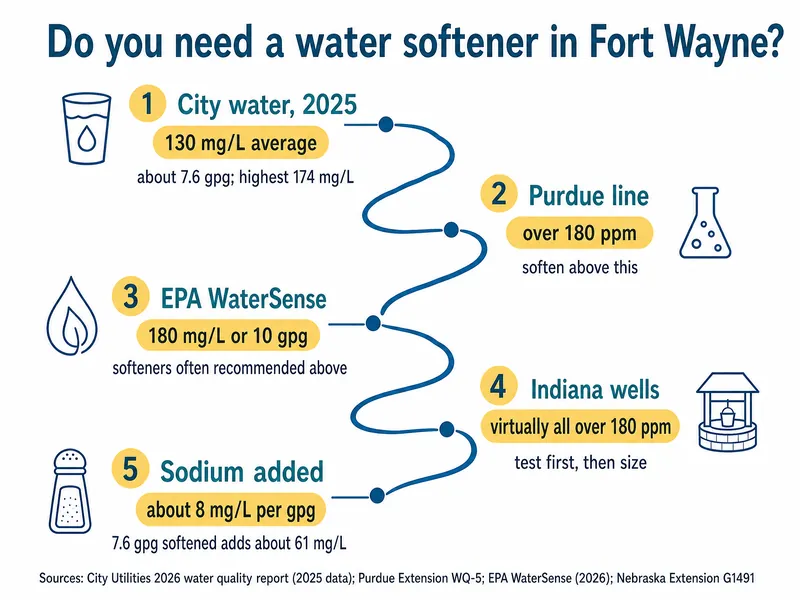
- Hardness on city water averaged 130 mg/L (about 7.6 gpg) across 2025 and topped out at 174 mg/L, according to the utility's June 2026 drinking water report.
- Purdue Extension's WQ-5 says water over 180 ppm "should be conditioned with a water softener"; city water stays under that line.
- EPA WaterSense says softeners are "often recommended" above 180 mg/L or 10 gpg, and that they "are not needed in all homes."
- Purdue says "virtually all" Indiana groundwater is over 180 ppm, so most Allen County wells clear the bar.
- Softening adds about 8 mg/L of sodium for each gpg removed, per Nebraska Extension: about 61 mg/L on average city water.
- A softener removes hardness only; it does not treat bacteria, arsenic or nitrate in a well.
Hardness shows up in two units. Water reports print ppm, identical to mg/L, while softener labels use grains per gallon (gpg); one grain per gallon equals 17.1 mg/L.
Do I need a water softener on Fort Wayne city water?
No: on Fort Wayne city water a softener is optional. Lime is added at the plant to pull calcium and magnesium out before the water is piped to homes, and page 4 of the report lists 2025 hardness at a 130 mg/L mean, low 94, high 174. The year before, the average was 122 mg/L.
That is "hard" on the USGS scale, which runs 121–180 mg/L for hard. But it sits under Purdue's 180 ppm softening line and under the 180 mg/L or 10 gpg level at which EPA's May 2026 WaterSense softener guide says softeners are often recommended. The same guide says to install one only "if you live in an area with substantial hardness" or where a water professional, utility or code recommends it.
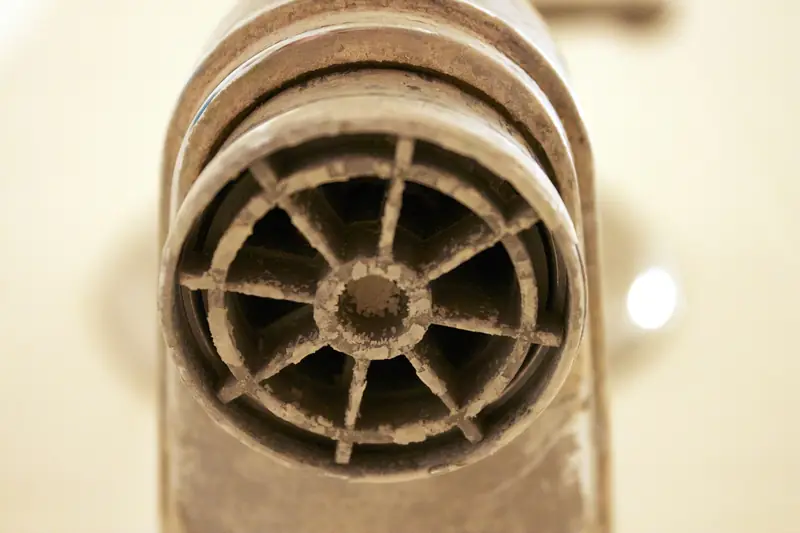
So why do some city homes have one? Because hardness at this level still leaves spots on glass and scale on fixtures, and some owners would rather pay for salt than scrub. That is a comfort choice. Is Fort Wayne water hard? explains the plant's lime softening and the scale it still leaves.
Softener numbers for Fort Wayne
- 130 mg/LCity water hardness, 2025 average (about 7.6 gpg)Source: City Utilities 2026 report
- 174 mg/LHighest city reading in 2025 (about 10.2 gpg)Source: City Utilities 2026 report
- 180 ppmHardness above which Purdue says to softenSource: Purdue Extension WQ-5
- 8 mg/LSodium added per gpg of hardness removedSource: Nebraska Extension G1491
Do Allen County wells need a water softener?
Most Allen County wells do, but only a lab test tells you. Purdue's WQ-5 says Indiana groundwater generally carries 20–400 ppm of hardness and that "virtually all" of it falls in the very hard class over 180 ppm. No Allen County hardness survey was found, so the number for your well comes from your own test.
Test before you buy anything. The Indiana Department of Health's well water testing page recommends bacteria and nitrate every year, and arsenic, fluoride, lead and copper at least every five years; how often should I test my well in Allen County? has the details. Ask the lab for hardness and iron too, because iron changes the softener you need.
A softener on a well handles hardness and some dissolved iron. It does nothing for coliform bacteria, arsenic or nitrate, which need their own treatment; what well water treatment do I need? sets out the order.
What does a water softener do?
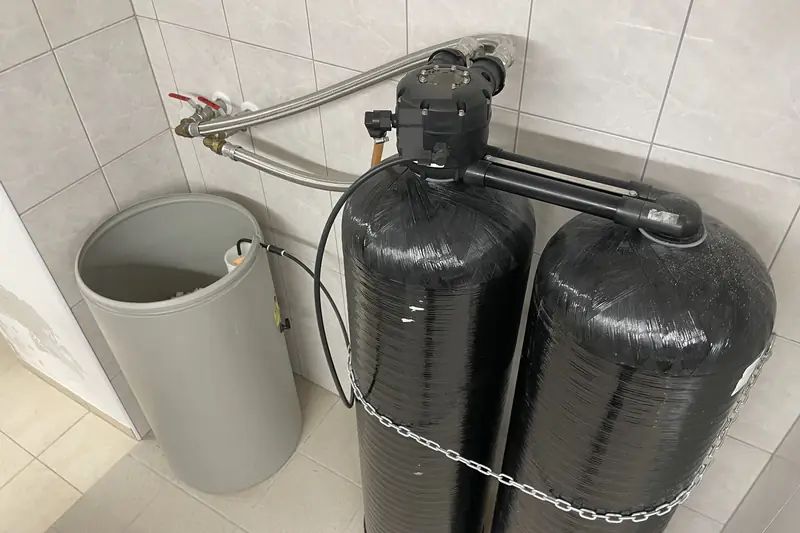
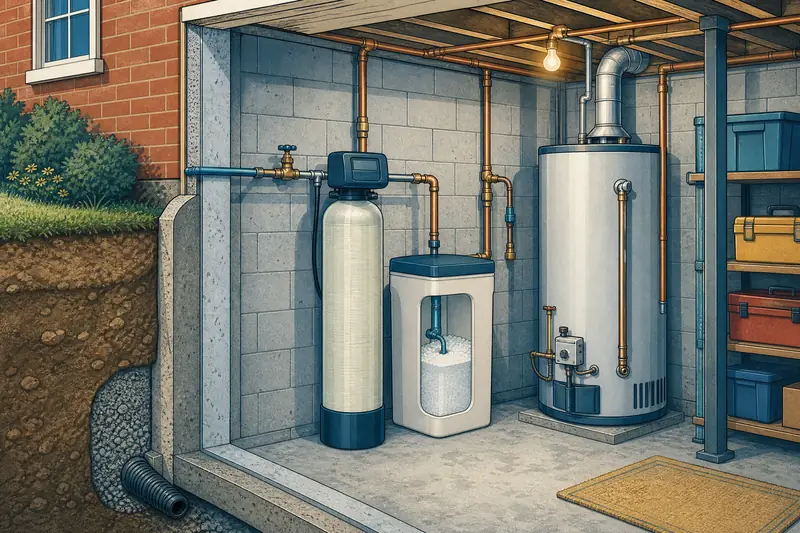
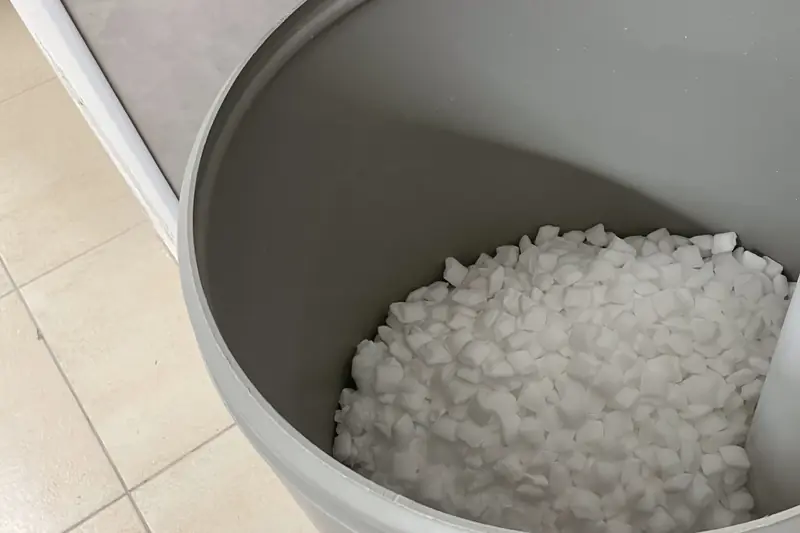
A water softener trades the hardness minerals, calcium and magnesium, for sodium or potassium. EPA's guide describes the resin beads trading sodium ions for hardness ions, and Nebraska Extension's G1491 says ion exchange "can remove nearly all calcium and magnesium." When the resin fills up, the unit regenerates by flushing it with brine from the salt tank.
What you notice is less scale on fixtures and in the water heater, fewer spots, and soap that lathers more easily. EPA says hard water can shorten the life of water heaters, toilet parts and washing machines.
What a softener does not do matters as much. Purdue's WQ-5 says softeners "are designed only to remove hardness, not other chemicals." It is not a lead filter or a chlorine filter; which filters reduce lead? covers lead.
| Water supply | Hardness on record | Purdue 180 ppm line | Usual answer |
|---|---|---|---|
| City of Fort Wayne | mean 130 mg/L; 94 low, 174 high (2025) | Under | Optional comfort choice |
| New Haven | 122 mg/L mean; 95 low, 175 high (2024) | Under | Optional; read New Haven's own report |
| Huntertown (three wells) | No hardness figure in its 2023 report | Unknown | Ask the utility or test |
| Private well | Generally 20–400 ppm statewide; "virtually all" over 180 | Usually over | Test, then size a softener |
What does a softener cost to run?
Running costs are mostly salt and regeneration water. For a family of four on average city water, the load is about 17,450 grains a week (4 people × 82 gallons a day, EPA WaterSense's average home use, × 7.6 gpg × 7 days). If the unit meets EPA's minimum salt efficiency (3,350 grains removed per pound), that comes to about 5.2 lb a week, or about 270 lb a year.
NDSU Extension's softening publication puts salt at about $5–$10 per 40-pound bag, so 270 lb is roughly seven bags, or about $35–$70 a year at its prices. Potassium chloride runs up to $25 a bag in the same publication. EPA's guide says a typical softener uses 20–70 gallons per regeneration, so weekly regeneration uses roughly 1,000–3,600 gallons a year.
Well water costs more to run because the hardness is higher; what size water softener do I need? works through a well example. On the purchase side, SoftPro lists the ECO city softener (sold by SoftPro Water Systems, same owners as this site) at $967–$2,677 and Quality Water Treatment the Elite city softener (sold by Quality Water Treatment, same owners as this site) at $1,367–$2,827, both in 32,000–64,000 grain sizes (the stores' listed prices in October 2026). For wells, SoftPro's ECO well softener (sold by SoftPro Water Systems, same owners as this site) lists at $947–$2,977 and Quality Water Treatment's Elite well softener (sold by Quality Water Treatment, same owners as this site) at $1,327–$3,367.
When can you skip a water softener?
You can skip a softener on city water if the scale and spotting don't bother you, and you should rethink one on a well whose problem is something else. EPA's guide is direct: softeners "are not needed in all homes and do not typically treat for other water contaminants."
Other reasons to skip or wait:
- Your lab test shows bacteria, nitrate or arsenic: treat those first, because a softener won't.
- You are on a septic system: EPA says to check with the septic maker or a local provider so brine doesn't overload it.
- Your concern is chlorine taste: that is a carbon filter question, covered at should I filter chlorine from Fort Wayne water?.
- You want less scale without salt: Nebraska Extension calls salt-free units "descalant devices," which don't remove hardness; the salt-free conditioner page compares them.
What about sodium from a water softener?
Softening adds sodium in proportion to the hardness removed. Nebraska's G1491 puts it at "about 8 mg/L for each grain per gallon (gpg) of hardness," so softening average city water (7.6 gpg) adds about 61 mg/L. City water already carried up to 54 ppm of sodium in 2025, per the report.
NDSU and Nebraska both say people on sodium-restricted diets should account for it and consult their physician. The usual fix is plumbing: Nebraska notes that a cold-water line to the kitchen tap that bypasses the softener keeps drinking and cooking water unsoftened. Potassium chloride can replace sodium chloride; Nebraska says it costs more and may be appropriate when sodium has to be limited.
How this answer was put together
Behind this answer: the city's drinking water report published in June 2026 for the 2025 calendar year, the New Haven and Huntertown utilities' latest yearly reports; Purdue Extension WQ-5; the USGS hardness page; EPA WaterSense's May 2026 softener guide and its statistics page; Nebraska Extension G1491 and G2275; NDSU Extension's ion exchange publication; and the Indiana Department of Health's well testing page. All were read in October 2026. Store prices are the listed ranges on October 26, 2026. Left out: health claims about hardness, skin or hair; an Allen County well hardness average, because no survey was found; and electricity costs, because no primary figure was found.
Follow-up questions
Will a softener stop scale in my water heater on city water?
It removes the calcium and magnesium that form scale, which EPA says can make water heaters run less efficiently. Whether that is worth the salt at 7.6 gpg is a judgment call; the city water is already under Purdue's 180 ppm line.
Does Fort Wayne require a softener permit?
Permit rules for softener installs were not something this site was able to confirm. Ask the building department before the work begins.
Can a softener drain to my floor drain in Fort Wayne?
Ask the installer and the building department about the drain connection for your house. EPA notes that some places limit softeners because the brine reaches wastewater; no such Fort Wayne limit was found.
Should my outdoor faucets get softened water?
EPA suggests installing the softener after the branch to hose bibbs and irrigation, so lawn water doesn't use salt.
Is a softener needed on New Haven water?
New Haven's 2025 report lists 122 mg/L of hardness (95–175) for 2024, also under Purdue's 180 ppm line. As on Fort Wayne water, a softener there is optional.
How do I know my well's hardness?
Ask a certified lab to include hardness and iron with the yearly bacteria and nitrate test. Purdue's WQ-5 explains how to read the results.
Will a softener fix orange stains from a well?
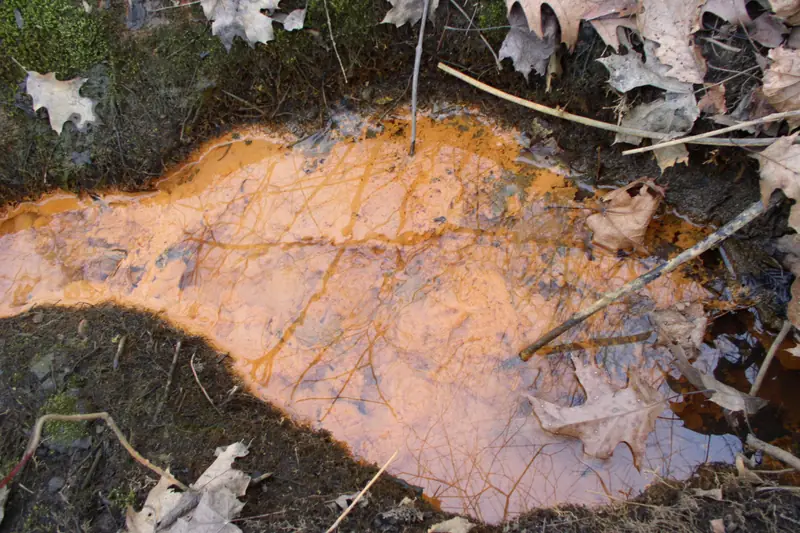
Only if the iron is dissolved and low. Penn State Extension says softeners are generally recommended for iron only under 5 mg/L of dissolved iron, with pH above 6.7.
Next questions
Have another question? See every Fort Wayne home water answer.