Is Fort Wayne Water Hard?
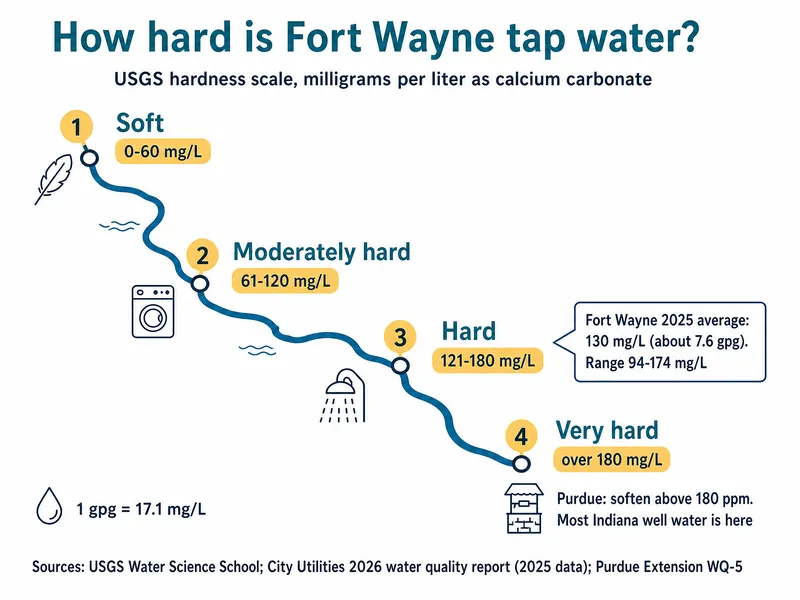
Is Fort Wayne water hard? Yes, by the U.S. Geological Survey's scale: City Utilities reported an average of 130 mg/L (about 7.6 grains per gallon) in 2025, after the plant softens it with lime.
Answered by the Three Rivers Home Water desk · Last updated
In this answer
The short version
- City Utilities' 2026 water quality report puts the 2025 total-hardness average at 130 mg/L (roughly 7.6 gpg), with a range of 94–174 mg/L.
- The USGS hardness scale puts 121–180 mg/L in its "hard" band, so the city average counts as hard and stays under the very hard band, which starts above 180 mg/L.
- The year before, the average was 122 mg/L (2024 data), so the figure moves a little from year to year.
- The Three Rivers Filtration Plant already softens St. Joseph River water with lime (calcium hydroxide) before it reaches your tap.
- Purdue Extension says water over 180 ppm should be softened; the city's 2025 maximum of 174 mg/L sits under that line.
- Private wells are a different story: in Purdue's words, "virtually all" of Indiana's groundwater tests above 180 ppm.
How hard is Fort Wayne water in grains per gallon?
Fort Wayne water averaged about 7.6 grains per gallon (gpg) in 2025, with a range of about 5.5 to 10.2 gpg. Those figures come from the city's 130 mg/L average and its 94–174 mg/L range, divided by 17.1, the conversion factor Purdue Extension uses (1 gpg = 17.1 mg/L).
Reports print hardness in ppm, which is the same as mg/L, so "130 ppm" in the report table and "130 mg/L" in its text are one number. Softener makers and water test strips usually use grains per gallon. If a salesperson or a test strip gives you a grains figure for city water, it should land somewhere between 5 and 11 gpg.
Fort Wayne hardness, 2025 data
- 130 mg/L2025 average total hardness (about 7.6 gpg)Source: City Utilities 2026 water quality report
- 94–174 mg/L2025 range (about 5.5–10.2 gpg)Source: City Utilities 2026 water quality report
- 121–180 mg/LThe "hard" band on the USGS scaleSource: USGS Water Science School
- 180 ppmLevel above which Purdue says to condition water with a softenerSource: Purdue Extension WQ-5
Why does City Utilities call it moderately soft?
The city's report describes its water as "moderately soft", but it gives no scale for that label, so the number is the safer thing to go by. Measured against the USGS classes, 130 mg/L is hard, and the 94–174 mg/L range runs from the top of "moderately hard" into the middle of "hard".
One likely reason for the friendly label is context: the plant takes hardness out on purpose, so the water leaving it is softer than the river and much softer than most Indiana well water. Either way, the report's own table is what counts. When you compare products or talk to an installer, use 130 mg/L (about 7.6 gpg), not the adjective.
How does lime softening work?
Lime softening adds calcium hydroxide to the water so dissolved calcium and magnesium drop out as solids that settle and are filtered away. City Utilities' water quality page describes lime as the chemical that "softens the water by causing naturally occurring calcium and magnesium to be removed".
It is one step in a longer line. Ferric sulfate and polymer clump the mud and particles first, powdered activated carbon takes out taste and odor, and chlorine, chlorine dioxide and UV light disinfect the water. The full sequence is laid out in where Fort Wayne tap water comes from.
Lime softening is a plant-scale process. It lowers hardness for the whole city but does not take it to zero, which is why the tap still shows 94 to 174 mg/L across the year. A home softener works differently: it swaps calcium and magnesium for sodium or potassium on a resin bed.
Is Fort Wayne water hard in every neighborhood?
Every home on Fort Wayne City Utilities water gets the same treated water from one plant, so hardness does not change by neighborhood in any planned way. What changes is the season and the river: the 94–174 mg/L range reflects how the St. Joseph River's mineral content moves through the year.
Homes outside the city system are another matter. New Haven buys treated surface water, and its 2025 report lists hardness of 122 mg/L (range 95–175) for 2024. Huntertown pumps from three wells, and its latest report online (2023 data) gives no hardness figure. If your bill comes from a different system, read that system's report.
| Water source | Hardness | Grains per gallon | Source and data year |
|---|---|---|---|
| Fort Wayne City Utilities | 130 mg/L average (94–174) | about 7.6 (5.5–10.2) | City Utilities 2026 report, 2025 data |
| Fort Wayne City Utilities, year before | 122 mg/L average (95–175) | about 7.1 | City Utilities 2025 report, 2024 data |
| New Haven Water Department | 122 mg/L (95–175) | about 7.1 | New Haven 2025 report, 2024 data |
| Huntertown Water Works (wells) | not published | not published | Huntertown report, 2023 data |
| Typical Indiana private well | usually over 180 ppm | over 10.5 | Purdue Extension WQ-5 |
What does hard water do in a Fort Wayne home?
At 130 mg/L, hard water mostly shows up as white scale and extra soap. The USGS says heated hard water leaves calcium carbonate deposits that can shorten equipment life and raise water-heating costs, and that soap reacts with calcium to form scum, so you need more of it.
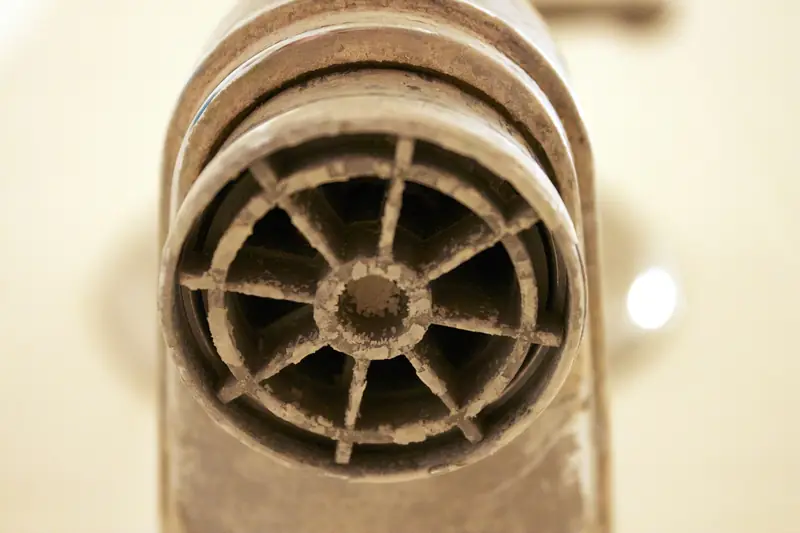
In practice you will notice it on faucet aerators, showerheads, glass shower doors and the inside of kettles. The water heater collects it too, which ties hardness to how long a water heater lasts. The USGS also notes that hardness "is not a health concern", so this is a cleaning and equipment question, not a drinking-water one.
Does Fort Wayne hard water need a softener?
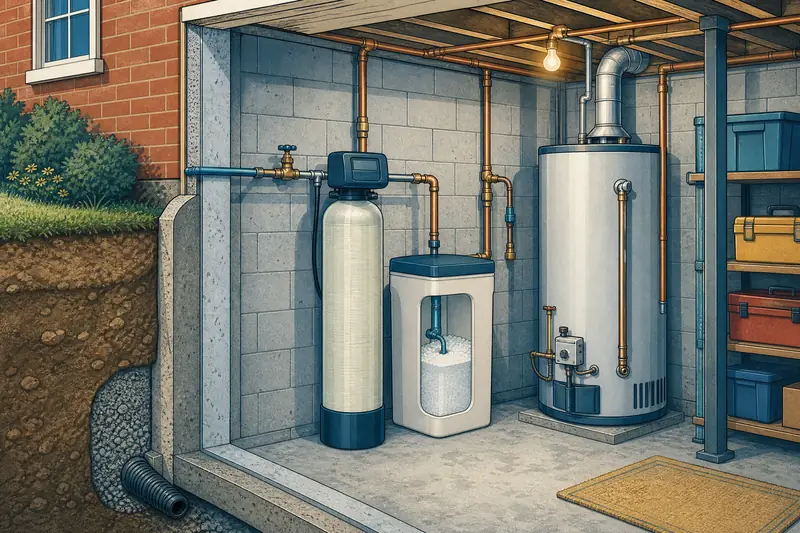
On City Utilities water, a softener is a comfort and scale-control choice, not something the numbers require. Purdue Extension's WQ-5 says water with hardness "greater than 180 ppm should be conditioned with a water softener", and the city's highest 2025 reading was 174 mg/L.
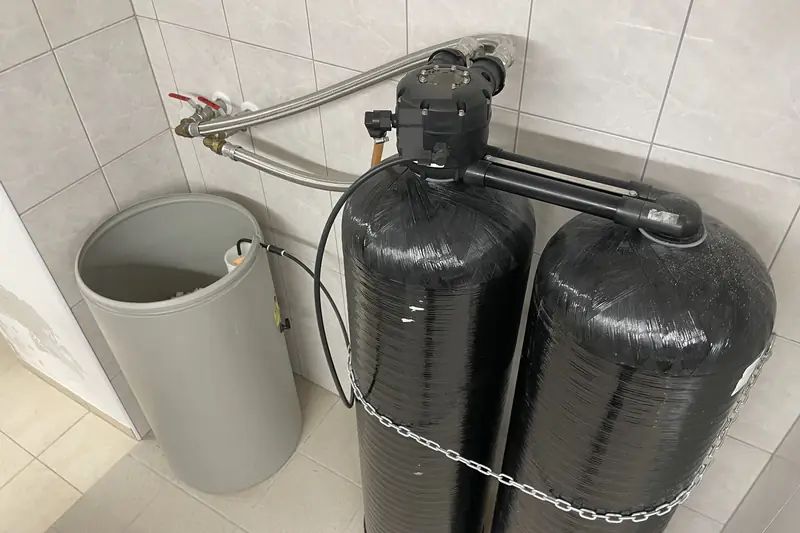
Some households still choose one because they dislike spotting or want less scale in a tankless heater. If you are weighing that, the Fort Wayne softener question has its own page on the trade-offs, and what size softener you need explains how hardness and household use set the grain size. On a private well the answer usually flips, because well water typically tests well over 180 ppm: start with a lab test, as how often to test your well explains.
How this answer was put together
This answer uses City Utilities' 2026 Annual Drinking Water Quality Report (2025 data, p.4 table and p.5 text) and its 2025 report (2024 data), the city's water quality web page on treatment chemicals, New Haven's 2025 report (2024 data), Huntertown's report covering 2023, the USGS Water Science School page on hardness and Purdue Extension WQ-5, all read in October 2026. Grains per gallon were worked out with Purdue's 17.1 factor and rounded to 0.1. Store hardness claims and hardness maps from non-utility sites were left out because they conflict with the city's measured numbers.
Follow-up questions
Does Fort Wayne water hardness change with the seasons?
Yes, within a band. The 2026 report shows 2025 hardness running from 94 to 174 mg/L around a 130 mg/L average, and the river's mineral load drives that spread. The report gives the range, not a month-by-month breakdown.
What hardness number should I put into a softener control?
Use about 8 gpg for City Utilities water, which rounds up from the 7.6 gpg average, or 10 gpg if you want to cover the top of the 2025 range. Check the manual first: some valves also ask about iron, which is not an issue on city water.
Is the hardness figure in the report an average or a maximum?
For hardness, the report table lists 130 as an average, labeled under its unregulated-compounds rows, with 94–174 as the range. Most other rows in the same table show the highest level detected instead, so read the column labels.
Is Fort Wayne water harder than New Haven water?
They are close. Fort Wayne averaged 130 mg/L in 2025; New Haven's latest report lists 122 mg/L for 2024, the same figure Fort Wayne reported for that year. New Haven buys treated surface water, according to EPA records.
Can a test strip check Fort Wayne hardness at home?
A hardness strip from a hardware store gives a rough reading in grains or ppm, enough to confirm you are in the 5–10 gpg band. For a well or a softener problem, a lab test gives a firmer number.
Does boiling Fort Wayne water make it harder?
Boiling drives some calcium out as the white crust in kettles, so the leftover water is not harder in any useful sense. What changes is where the minerals sit: on the kettle walls rather than in the water.
Will hard water void a water heater warranty?
Warranty terms vary by maker, so read your tank's warranty card. A. O. Smith and Rheem both put typical tank life at about 8 to 12 years, and the USGS notes that hard-water scale can reduce the life of water-heating equipment.
More tap water questions

Have another question? See Fort Wayne home water questions, answered.